
Everywhere you look right now, your feed is likely flooded with ads promising that a new artificial intelligence tool will instantly systemize your business.
It sounds incredibly tempting. Creators and software platforms are heavily pushing the narrative that you can use AI-based tools to instantly document your standard operating procedures (SOPs).
But there is a major problem with this trend: many business owners are confusing rapid documentation with actual progress in systemizing their operations.
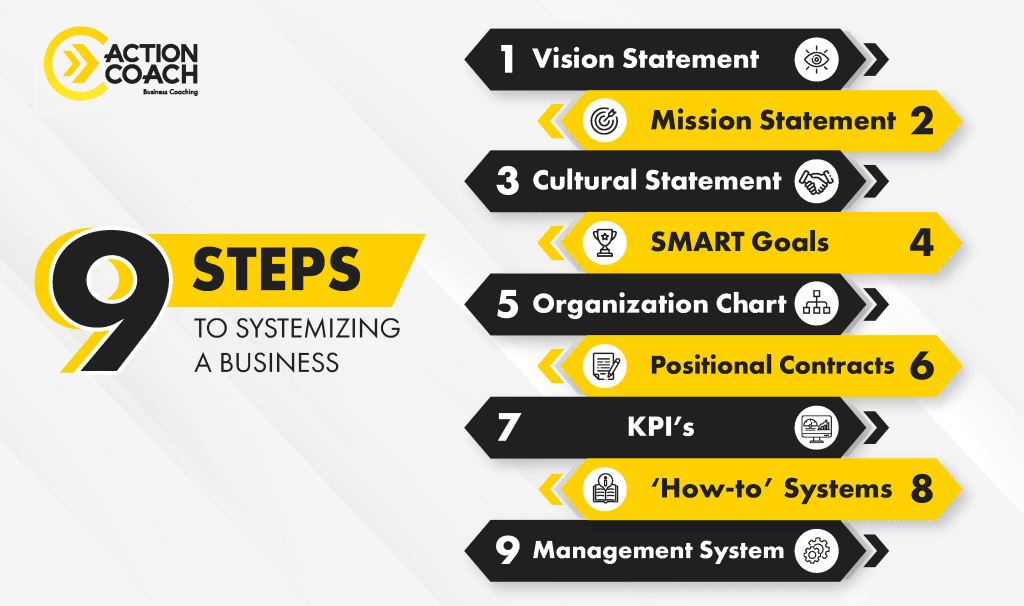
The reality? The documentation of systems and procedures is actually step eight out of the nine steps required to fully systemize a business.
If you haven’t successfully completed the other steps, you are going to be stuck with an awesome, highly detailed set of procedures that your team completely ignores. A lack of written systems is rarely the core issue when a business is struggling.
Before you introduce complex technology to automate workflows, you must look at the three foundational areas that are likely where the real breakdown is happening.
1. Culture: The Standard You Tolerate
Theoretically, your company culture is defined by your beautifully worded Vision, Mission, and Core Value statements.
In reality, your culture is defined by the worst behavior you allow.
If your team is already ignoring the guidelines, processes, and rules that you currently have in place, generating a more complete, AI-driven set of instructions isn’t going to fix a thing. You cannot automate compliance or respect.
The Fix: You need to start by shifting your focus back to your culture. Revisit it with your team, remind everyone what it means, and explicitly define how those values translate into daily, expected behaviors.
2. Expectations: The “Why” Behind the Work
Once your culture is re-established and fully explained to the team, the next operational gap is usually a lack of clear expectations.
Ask yourself these questions about your team:
- Does every single person know exactly who they report to? (Do you have an Org Chart?)
- Does everyone have their own specific performance metrics or Key Performance Indicators (KPIs)?
- Do they possess an updated position description that clearly outlines their responsibilities and expected outcomes?
If the answer to any of these is “no,” your team won’t follow your new automated procedures because they have no clear reason or performance-based incentive to do so. Combined with your culture, clear job expectations explain why your team should use the procedures you build.
3. People Management: Driving True Utilization
To keep your team consistently following your processes, and to help them get better at them over time, you must have a robust management system in place centered around accountability and continuous improvement.
Consistency doesn’t happen by accident, and it certainly doesn’t happen just because an AI bot wrote an SOP. It requires management routines that track:
- Daily priorities to keep everyone focused on immediate targets.
- Weekly accomplishments to measure progress and realign focus.
A consistent management process is what actually drives system utilization. When your team is held accountable through structured management, it naturally leads to improved productivity and, most importantly, organizational predictability.
Lay the Right Groundwork First
Technology is an incredible accelerator, but it cannot substitute for a broken foundation. When applied to structural issues, it simply creates automated chaos.
If you want your business to benefit from modern technology and AI tools, you have to build the foundational steps that make those tools usable.
If you’re ready to learn how installing the ABoS platform can help you establish the groundwork to properly utilize today’s standard tools and technology, we are here to help. Schedule an intro call with me and let’s get your foundations sorted out first.
Author: Mark McNulty, Business Coach in Louisville, KY.